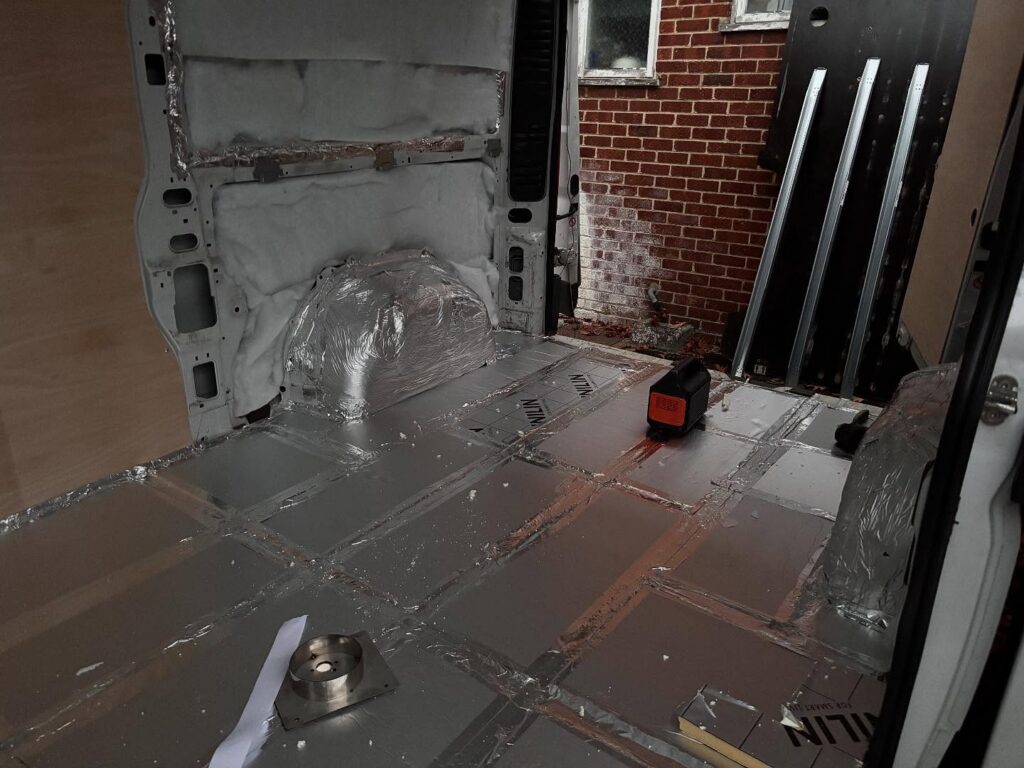
Buying the van was only the first step.
At that point it was still exactly what it had been designed to be: a large white Openreach van.
No bed.
No storage.
No insulation.
No solar.
No plan beyond a rough idea that somehow this vehicle was going to become my home.
Looking back, that sounds slightly ridiculous.
At the time, it felt slightly ridiculous too.
The difference was that I had reached a point where doing something felt better than doing nothing.
For years I had drifted along financially.
I earned decent money, but I never seemed to get ahead. Every time I made progress, something would happen and I would end up back where I started.
When I bought the van, I knew one thing with absolute certainty.
If nothing changed, nothing would change.
The debt wasn’t going to disappear by itself.
My financial situation wasn’t going to improve through wishful thinking.
If I wanted a different future, I was going to have to make different decisions.
The van was one of those decisions.
The first few weeks were spent planning more than building.
I watched videos.
Read forums.
Looked at hundreds of photographs of other people’s conversions.
Some were incredible.
Beautiful woodwork.
Perfect lighting.
Professional-looking interiors that looked more like apartments than vehicles.
Mine wasn’t going to be like that.
Not because I didn’t appreciate them, but because I had a different objective.
This wasn’t a lifestyle project.
This was a financial recovery project.
Every pound I spent on the conversion was a pound that couldn’t go towards clearing debt.
That forced me to think differently.
I wasn’t trying to build the perfect van.
I was trying to build a practical home.
A place that would allow me to reduce my living costs and focus on repairing the damage I had done to my finances.
That mindset shaped every decision that followed.
Some things were bought second-hand.
Some things were built rather than purchased.
Some ideas were abandoned completely when I realised they weren’t necessary.
The conversion became a lesson in simplicity.
What do I actually need?
What can I live without?
What adds value, and what simply costs money?
They’re questions that started with the van, but they eventually spilled over into every other area of my life.
The strange thing is that as the van slowly changed, so did my thinking.
I had started the project believing I was building a home.
In reality, I was also rebuilding myself.
The conversion had begun.
Not just for the van.
For me too.