Blog

  • The first few nights…

    My First Night Living in a Van

    People often ask me what my first night living in the van was like.

    The honest answer is… I don’t think I’ve ever felt so uncertain.

    It was mid-October 2025.

    I’d spent weeks converting the van whenever I had the chance. It still wasn’t finished, but I’d reached the point where I felt it was ready enough.

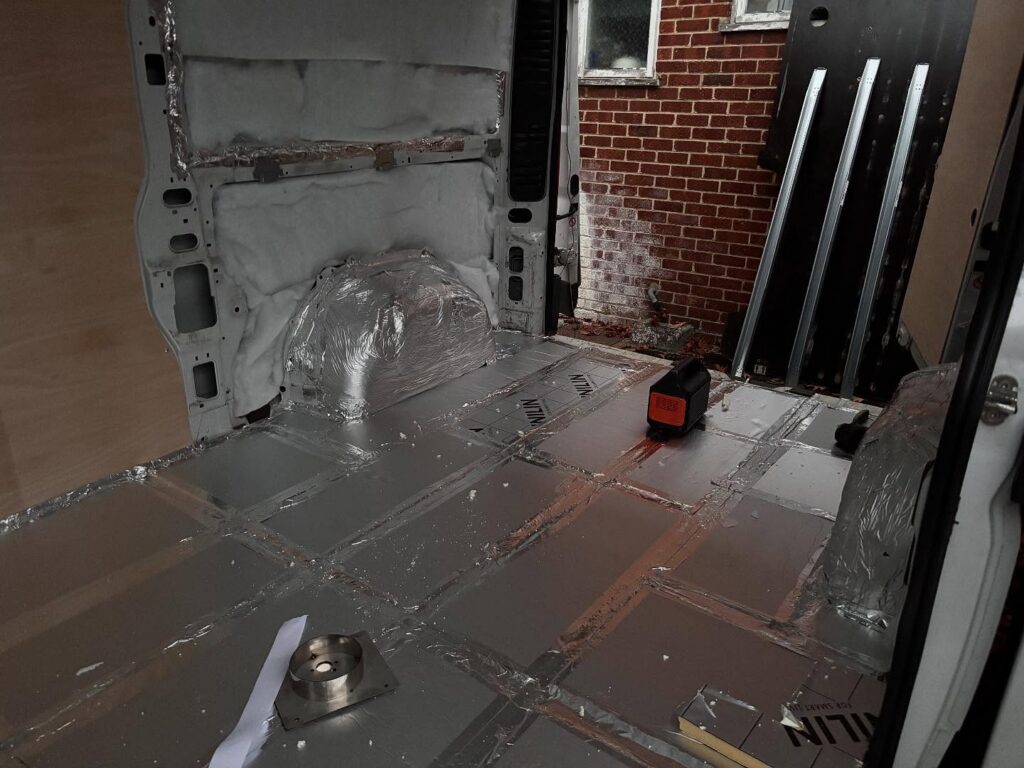
    It had sound deadening.

    It had insulation.

    It had ply-lined walls.

    I’d bought a power station, so I had electricity from day one, and I’d bought a portable diesel heater ready for the colder months.

    The essentials were there.

    Everything else could wait.

    Even the bed wasn’t really a bed.

    For the first few months it was simply two sofa cushions pushed together.

    Not exactly luxury.

    But it was somewhere to sleep.

    I remember sitting there that first evening before I went to bed.

    It was quiet.

    Too quiet.

    For the first time in a long time, I didn’t have anything to distract me.

    It was just me and my thoughts.

    I’d made this huge decision.

    I’d left the comfort of a house to move into a van that still wasn’t finished.

    And for the first time, there was no planning left to do.

    No more YouTube videos to watch.

    No more researching.

    No more saying, “I’ll move in once I’ve finished this job.”

    I’d done it.

    And suddenly I realised something.

    There was absolutely no guarantee this would work.

    I’d convinced myself that moving into a van would help me get out of debt.

    I’d worked out the numbers.

    I’d made the spreadsheets.

    I’d planned it as carefully as I could.

    But life doesn’t always follow spreadsheets.

    What if I hated it?

    What if winter was too much?

    What if the van became unreliable?

    What if I simply couldn’t keep doing it?

    I didn’t know.

    That’s what made it frightening.

    People often think courage means not being afraid.

    I don’t think that’s true.

    I think courage is making a decision even when you’re not certain it’s the right one.

    Lying there that first night on two sofa cushions, I wasn’t thinking, “I’ve got this.”

    I was thinking, “I really hope this works.”

    Because if it didn’t…

    I honestly didn’t know what the alternative was.

    I knew I couldn’t keep living as I had been.

    Financially, I was standing still.

    Emotionally, I felt like I was standing still too.

    The van wasn’t really what I wanted.

    What I wanted was the life I hoped it would help me build.

    One where I wasn’t worrying about debt every day.

    One where I could start saving instead of just surviving.

    One where, eventually, I could buy a home of my own.

    The van was simply the bridge between where I was and where I wanted to be.

    That first night, I don’t remember sleeping particularly well.

    Every sound seemed louder than it probably was.

    Every gust of wind made me look up.

    Everything felt unfamiliar.

    But somewhere during that night, something shifted.

    I realised that although I didn’t know whether the plan would succeed…

    …I did know one thing.

    If I’d stayed where I was, nothing would have changed.

    The van wasn’t a guarantee of success.

    It was a chance.

    A chance to build a different future.

    Looking back now, I think that’s why that first night will always stay with me.

    Not because it was comfortable.

    Not because it was enjoyable.

    But because it was the night I chose hope over certainty.

    I stopped waiting for life to improve by itself and accepted that, however uncomfortable it might be, I had to be the one to change it.

    I fell asleep that night not knowing whether I’d made the best decision of my life…

    …or the worst.

    Thankfully, as I write this today, I think I know the answer.

  • How much does Van Life in the UK cost?

    One of the questions I get asked most often is:

    “How much does it actually cost to live in a van?”

    The answer, like most things in life, is that it depends.

    It depends on the van.

    It depends on your lifestyle.

    It depends on how much travelling you do.

    And it depends on whether you’re trying to save money or simply live differently.

    For me, the decision to move into a van wasn’t about adventure.

    It was about finances.

    I was carrying nearly £48,000 of debt and needed to make a significant change if I was going to get out of it.

    Living in a van became part of that plan.

    So what does it actually cost me?

    The Big Saving

    The biggest financial benefit is obvious.

    I don’t pay rent. When i moved out of the flat, rent was £1105 per month.

    That single decision changed everything.

    Instead of paying hundreds of pounds every month towards housing costs, I can direct that money towards debt repayment, savings and building a better future.

    Without the van, I genuinely don’t think I’d have made the same progress.

    Fuel

    Fuel is one of the largest ongoing expenses.

    A van is heavier than a car and generally less efficient.

    The amount you spend will depend entirely on how much you travel.

    My lifestyle is probably different from many van lifers.

    I still work a full-time job and my commute is relatively short, so my fuel costs are lower than someone constantly travelling around the country.

    Insurance

    Van insurance is another fixed cost.

    It’s one of those bills that isn’t particularly exciting but has to be paid.

    The cost varies depending on your age, driving history, vehicle and usage.

    Maintenance and Repairs

    This is where reality occasionally bites.

    Living in a van means your home and your transport are the same thing.

    When something breaks, it matters.

    I’ve already experienced unexpected costs including tyres, a failed MOT and a replacement windscreen.

    Those bills can arrive without warning.

    One of the lessons I’ve learned is the importance of maintaining an emergency fund.

    The van saves me money overall, but it still requires investment and maintenance.

    Food

    Food costs haven’t changed dramatically.

    I still eat.

    I still buy groceries.

    The main difference is how I prepare meals and how much storage space I have available.

    The RidgeMonkey has become one of the most-used items in the van, allowing me to cook a surprising range of meals in a very small space.

    Electricity

    One advantage of the setup is that I generate much of my own electricity through solar power.

    Combined with a power station, this means many of my day-to-day electrical needs are covered without needing to plug into mains power.

    The initial investment wasn’t insignificant, but the ongoing running costs are very low.

    So How Much Does It Cost?

    The honest answer is that I spend significantly less than I would if I were renting.

    That’s the entire reason I made the move.

    Van life isn’t free.

    There is fuel.

    There is insurance.

    There are repairs.

    There are unexpected costs.

    But for me, the numbers still work.

    More importantly, they work well enough to allow me to pursue goals that previously felt out of reach.

    Would I Recommend It?

    That depends on your reasons.

    If you’re considering van life because you think it’s an easy life, I’d probably say no.

    It comes with compromises.

    There are inconveniences, privacy is almost non existent.

    There are days when things are more difficult than they would be in a conventional home.

    But if you’re looking for a way to reduce your costs, simplify your life and focus on bigger goals, it can be incredibly powerful.

    Moving into a van hasn’t solved all my problems.

    What it has done is create space.

    Financial space.

    Mental space.

    The ability to make progress.

    And for me, that’s been worth far more than the cost of living in it.

    Typical Monthly CostsCost
    Fuel£175
    Food & household£275
    Mobile phone£25
    Insurance£50
    Road tax£35
    Breakdown cover£12
    Laundry£15
    Maintenance fund£100
    Miscellaneous£113
    Total£800
  • Moving in…

    Most people finish converting their van before they move into it.

    I didn’t.

    The original plan was simple enough. Buy the van, convert it, then move in once everything was finished.

    Reality had other ideas.

    The more I looked at my finances, the more I realised that time mattered. Every month I delayed was another month of rent, another month where less money was going towards my debt, and another month where I was putting off the change I knew I needed to make.

    At some point I had a choice.

    I could wait until everything was perfect.

    Or I could start living the life I was working towards.

    The van wasn’t finished.

    It had sound deadening.

    It had insulation.

    It had ply-lined walls.

    I’d already bought a power station, so I had electricity from day one. I’d also bought a portable diesel heater, which meant I had a plan for keeping warm once winter arrived.

    The essentials were there.

    Even the bed wasn’t really a bed.

    For the first few months it consisted of two sofa cushions.

    Not a custom mattress.

    Not memory foam.

    Just two sofa cushions that did the job.

    Looking back, that probably sums up the whole van at the time. It wasn’t luxurious, but it was functional.

    There were still jobs to do.

    There were still ideas I wanted to try.

    There were still plenty of things that needed improving.

    But by mid-October 2025, I reached the point where I felt ready.

    Or perhaps more accurately, ready enough.

    The timing wasn’t ideal. Winter was approaching and the sensible option would probably have been to wait until everything was finished.

    But I knew there would always be another reason to delay.

    Another improvement to make.

    Another item to buy.

    Another weekend to spend preparing.

    At some point you have to stop preparing and start doing.

    So I moved in.

    Not because the van was finished.

    But because it was ready enough to begin the next chapter.

    The first few weeks were a mixture of excitement and uncertainty.

    I remember constantly noticing things that needed changing.

    Some ideas worked brilliantly.

    Others looked good in theory but made much less sense when I was actually living in the space.

    That’s one of the things nobody really tells you about van conversions.

    You don’t truly know whether something works until you use it every day.

    Living in the van became part of the design process.

    Instead of guessing what I might need, I was discovering what I actually needed.

    Storage changed.

    Layouts changed.

    Small improvements were made whenever I had time.

    The van slowly evolved around the way I lived.

    One thing I’ve learned over the years is that there is always another reason to wait.

    Another improvement.

    Another bit of preparation.

    Another thing to buy.

    If I’d decided the van needed to be completely finished before I moved in, I’d probably have found another job to do after that as well.

    Moving in before the conversion was complete taught me an important lesson.

    Progress is often more important than perfection.

    The van didn’t need to be perfect.

    It needed to work.

    And it did.

    There were moments where I questioned whether I had done the right thing.

    Particularly during bad weather.

    Particularly when something broke.

    Particularly when I was tired after work and just wanted everything to be easy.

    But there was also something incredibly satisfying about it.

    Each improvement solved a real problem.

    Each weekend I could see progress.

    Each month I could see my debt reducing.

    The van and the debt journey became linked.

    One was making the other possible.

    The unfinished van wasn’t a sign that I wasn’t ready.

    It was a sign that I had stopped waiting for the perfect moment.

    Over time the unfinished van became the van I live in today.

    Not because I completed it all at once, but because I kept improving it bit by bit.

    In many ways, that’s exactly how I’ve approached getting out of debt.

    Not perfectly.

    Not quickly.

    Just consistently.

    One improvement at a time.

  • Building a Home on Wheels

    When I bought the van, I had absolutely no experience converting one.

    I’d never insulated a van. I’d never fitted ply lining. I’d never installed solar. I’d never built furniture. In fact, if you’d told me a year earlier that I’d be living in a self-converted van, I’d probably have laughed.

    Yet somehow, here I was.

    The van itself was just an empty shell. A large white delivery van that had spent its previous life carrying other people’s things around the country.

    My challenge was to turn it into a place where I could live.

    Not a luxury camper.

    Not something that would end up featured in a magazine.

    Just a practical, affordable home that would allow me to reduce my costs and focus on getting out of debt.

    Like most people these days, I started with YouTube.

    I spent hours watching van conversion videos. Some people watch Netflix. I watched people insulate vans.

    Three creators in particular became regular viewing: Will’s Whereabouts, Love Sundays and Greg Virgoe.

    What I liked about them was that they felt realistic.

    There are plenty of channels showing £100,000+ conversions with every gadget imaginable. They look amazing, but they weren’t what I was trying to build.

    I wasn’t trying to build my dream van.

    I was trying to build a better future.

    Greg Virgoe’s channel was especially useful when it came to understanding the technical side of things. Electrical systems, solar, batteries, wiring – all the things that seemed completely overwhelming when I first started.

    Will’s Whereabouts and Love Sundays helped me see the practical side of van life. The reality rather than the fantasy.

    The more I watched, the more I realised there wasn’t one right way to convert a van.

    There was only the way that worked for you.

    The first stage was sound deadening.

    It isn’t particularly exciting, and it certainly doesn’t make for dramatic before-and-after photographs, but it was one of the first things I tackled.

    An empty van is noisy.

    Every panel seems to vibrate.

    Every bump in the road echoes around the metal shell.

    Adding sound deadening immediately made the van feel more solid and less industrial.

    It was one of those jobs where you don’t fully appreciate the difference until it’s done.

    After that came insulation.

    Again, not glamorous.

    Nobody looks at a completed van and says, “That’s excellent insulation.”

    But when you’re trying to sleep on a cold winter night, you appreciate it.

    I knew from the start that I intended to stay in the van through winter. If I was going to make this lifestyle work, I needed to give myself the best chance possible.

    So the insulation went in.

    Then came the ply lining.

    For me, that was the stage where everything started to feel real.

    The bare metal walls disappeared.

    The inside started looking less like a commercial vehicle and more like somewhere a person might actually live.

    I could finally begin to picture the finished result.

    Or at least what I thought the finished result would be.

    The truth is, the van wasn’t finished when I moved into it.

    Far from it.

    I reached a point where I had a choice.

    I could wait until everything was perfect.

    Or I could move in and continue building.

    Looking back, moving in before the conversion was finished was one of the best decisions I made.

    Living in the van taught me things that no amount of planning ever could.

    It quickly became obvious which ideas were useful and which weren’t.

    Things I thought would be essential turned out to be unnecessary.

    Other things that I’d barely considered suddenly became priorities.

    The van evolved because I was living in it.

    Every improvement solved a real problem.

    Every addition had a purpose.

    I wasn’t building a show van.

    I was building a home.

    The funny thing is that the conversion followed the same pattern as my debt journey.

    Neither happened overnight.

    Neither required perfection.

    Both were built through small, consistent steps.

    One weekend I would fit some insulation.

    Another weekend I’d work on storage.

    Then there would be a period where I simply lived in it and worked out what needed changing next.

    The debt worked in much the same way.

    One payment.

    One decision.

    One month at a time.

    People sometimes ask me whether living in a van was difficult.

    The answer is yes.

    Of course it was.

    There are inconveniences.

    There are compromises.

    There are days when it would be easier to have a conventional home.

    But there is another side to that equation.

    The van gave me something that my previous lifestyle wasn’t giving me.

    Progress.

    Every month I wasn’t paying rent was another month I could put money towards clearing debt.

    Every improvement I made increased my comfort without increasing my financial burden.

    The van became a tool.

    Not just somewhere to live, but something that helped me move towards a different future.

    Today, when I sit inside it, I don’t really see the cupboards, the insulation or the solar panel.

    I see every decision that led here.

    I see the moment I stopped waiting for things to improve and started making changes myself.

    The conversion wasn’t perfect.

    In many ways, it still isn’t finished.

    But neither am I.

    And perhaps that’s the point.

    Both the van and I are works in progress.

  • The Conversion Begins…

    Buying the van was only the first step.

    At that point it was still exactly what it had been designed to be: a large white Openreach van.

    No bed.

    No storage.

    No insulation.

    No solar.

    No plan beyond a rough idea that somehow this vehicle was going to become my home.

    Looking back, that sounds slightly ridiculous.

    At the time, it felt slightly ridiculous too.

    The difference was that I had reached a point where doing something felt better than doing nothing.

    For years I had drifted along financially.

    I earned decent money, but I never seemed to get ahead. Every time I made progress, something would happen and I would end up back where I started.

    When I bought the van, I knew one thing with absolute certainty.

    If nothing changed, nothing would change.

    The debt wasn’t going to disappear by itself.

    My financial situation wasn’t going to improve through wishful thinking.

    If I wanted a different future, I was going to have to make different decisions.

    The van was one of those decisions.

    The first few weeks were spent planning more than building.

    I watched videos.

    Read forums.

    Looked at hundreds of photographs of other people’s conversions.

    Some were incredible.

    Beautiful woodwork.

    Perfect lighting.

    Professional-looking interiors that looked more like apartments than vehicles.

    Mine wasn’t going to be like that.

    Not because I didn’t appreciate them, but because I had a different objective.

    This wasn’t a lifestyle project.

    This was a financial recovery project.

    Every pound I spent on the conversion was a pound that couldn’t go towards clearing debt.

    That forced me to think differently.

    I wasn’t trying to build the perfect van.

    I was trying to build a practical home.

    A place that would allow me to reduce my living costs and focus on repairing the damage I had done to my finances.

    That mindset shaped every decision that followed.

    Some things were bought second-hand.

    Some things were built rather than purchased.

    Some ideas were abandoned completely when I realised they weren’t necessary.

    The conversion became a lesson in simplicity.

    What do I actually need?

    What can I live without?

    What adds value, and what simply costs money?

    They’re questions that started with the van, but they eventually spilled over into every other area of my life.

    The strange thing is that as the van slowly changed, so did my thinking.

    I had started the project believing I was building a home.

    In reality, I was also rebuilding myself.

    The conversion had begun.

    Not just for the van.

    For me too.

  • Buying The Van

    Research is comfortable.

    Buying a van is not.

    For weeks, maybe months, I’d been reading, watching videos and convincing myself that moving into a van was a realistic option.

    Then came the moment when I had to stop imagining it and actually do something.

    The search itself was an education.

    I quickly discovered that buying a van is a little like buying a house.

    Everything looks great in the photographs.

    The reality can be somewhat different.

    Every advert seemed to describe a van that had been lovingly maintained, professionally cared for and was only being sold because of some unfortunate change in circumstances.

    Strangely, many of them looked considerably less impressive when viewed in person.

    I spent a lot of time looking.

    Comparing.

    Researching.

    Second guessing myself.

    Part of me was excited.

    Part of me was terrified.

    Because although I was technically buying a vehicle, I knew I was really buying something much bigger than that.

    I was buying a plan.

    A future.

    An opportunity.

    A chance to change my financial trajectory.

    That creates a certain amount of pressure.

    The obvious fear was buying the wrong van.

    What if it broke down?

    What if I’d missed something?

    What if I ended up spending thousands on repairs?

    What if I’d made a mistake?

    Looking back, those fears weren’t unreasonable.

    When you’re committing a significant amount of money to something that could fundamentally change your life, a degree of caution is healthy.

    Eventually I found the van that would become my home.

    Not a perfect van.

    Not a luxury van.

    Not the sort of van that would feature on the cover of a magazine.

    Just a van that felt right.

    More importantly, it felt possible.

    That distinction matters.

    One thing I’ve learned during this journey is that progress rarely comes from finding the perfect solution.

    It comes from finding a solution that works.

    I remember the mixture of emotions when the purchase was finally complete.

    Relief.

    Excitement.

    Doubt.

    Anticipation.

    And a small voice in the back of my mind repeatedly asking whether I’d completely lost the plot.

    The funny thing is that once the van was mine, the decision suddenly felt very different.

    Before buying it, I could still treat the idea as a possibility.

    After buying it, it became a project.

    A real one.

    There was now a van sitting there waiting for me to figure out what came next.

    The research phase was over.

    The preparation phase was over.

    The planning phase was over.

    The action phase had begun.

    I didn’t know it at the time, but buying the van was one of the easiest parts of the journey.

    The real challenge was turning it into a place I could actually live.

    That would be the next chapter.

    And unlike the research, there was no longer any option to simply close a browser tab and forget about it.

    The van was real.

    The decision was real.

    And for the first time, so was the future I was trying to build.

  • Research

    One of the biggest misconceptions people have about moving into a van is that it happens overnight.

    At least in my case, it didn’t.

    Long before I bought a van, I spent countless hours researching.

    At first, the research was almost accidental.

    I’d watch the occasional YouTube video.

    Read a blog post.

    Browse an online forum.

    Look at photographs and wonder whether I could really live in a space that small.

    The more I looked, the more questions I had.

    How much would it cost?

    Where would I park?

    How would I cook?

    What would I do for electricity?

    What about showers?

    What about winter?

    What about summer?

    What about work?

    It quickly became clear that van life wasn’t one decision.

    It was a hundred smaller decisions.

    The challenge wasn’t finding information.

    There was plenty of that.

    The challenge was filtering it.

    The internet is full of people travelling Europe in beautifully converted vans that cost more than some houses.

    There are also people living very simple lives with little more than a mattress and a camping stove.

    I needed to find something that sat somewhere in the middle.

    Not a dream.

    Not a fantasy.

    Something practical.

    Something achievable.

    Something that would help me reach my goal of reducing debt and building a better future.

    One of the most useful things I discovered during my research was that there isn’t one correct way to do van life.

    Everyone solves the same problems differently.

    Power.

    Water.

    Storage.

    Cooking.

    Heating.

    Internet.

    The solutions varied enormously.

    What mattered wasn’t copying someone else’s setup.

    What mattered was understanding my own needs.

    I wasn’t planning to travel the world.

    I wasn’t planning to quit my job.

    I wasn’t looking for adventure.

    I was looking for a financial reset.

    That changed everything.

    Instead of asking:

    “What is the best van?”

    I started asking:

    “What is the best van for me?”

    Instead of asking:

    “What is the most impressive setup?”

    I started asking:

    “What is the simplest setup that will work?”

    The more research I did, the more realistic the idea became.

    What had initially felt impossible started to feel practical.

    The fears didn’t disappear.

    If anything, I became more aware of the challenges.

    But I also became more aware of the opportunities.

    Research has an interesting effect.

    At the beginning, it shows you all the reasons something might fail.

    Eventually, if you’re honest with yourself, it starts showing you how it might succeed.

    That was the point I eventually reached.

    I wasn’t researching because I was curious anymore.

    I was researching because I was preparing.

    The decision had already been made.

    I just hadn’t realised it yet.

    Looking back now, all those hours spent watching videos, reading articles and comparing options were doing something far more important than teaching me about vans.

    They were helping me to believe that change was possible.

    Sometimes that’s the most valuable thing that research can give you.

  • The Big Decision

    People often assume that moving into a van was a spontaneous decision.

    It wasn’t.

    In fact, I spent far longer thinking about it than I did actually doing it.

    By the time the idea first entered my head, I already knew something needed to change.

    The debt wasn’t going away on its own.

    At its peak, it was approaching £50,000, and although I was working full-time and meeting my commitments, I couldn’t escape the feeling that I was running hard just to stand still.

    I needed a way to accelerate progress.

    The problem was that knowing you need change and knowing what change to make are two very different things.

    For a while, the idea of moving into a van felt ridiculous.

    It was the sort of thing other people did.

    People on YouTube.

    People with travel blogs.

    People who seemed far more adventurous than I felt.

    Not someone with a full-time job, a spreadsheet full of debt, and a long list of responsibilities.

    But the idea refused to go away.

    Every time I looked at my expenses, it came back.

    Every time I thought about how long it would take to become debt free, it came back.

    Every time I imagined continuing exactly as I was for the next five or ten years, it came back.

    The question slowly changed.

    It stopped being:

    “Could I live in a van?”

    And became:

    “What happens if I don’t?”

    That was the uncomfortable part.

    Because doing nothing felt safer.

    Most people understand renting a flat.

    Most people understand paying a mortgage.

    Most people do not understand voluntarily moving into a van.

    I worried about what people would think.

    I worried about whether I could actually do it.

    I worried about winter.

    I worried about privacy.

    I worried about practicality.

    I worried about making a mistake.

    Looking back, I probably worried about everything except the one thing I should have focused on.

    The opportunity.

    Because every major decision comes with risks.

    But it also comes with potential rewards.

    The reward wasn’t living in a van.

    The reward was freedom.

    The possibility of reducing my expenses significantly.

    The possibility of paying down debt faster.

    The possibility of creating options for my future that simply didn’t exist before.

    Eventually I reached a point where I realised something important.

    There was no perfect decision.

    There was only a decision.

    I could continue to analyse, research, and think about it endlessly, or I could take action and find out whether the idea worked.

    At some point, every plan leaves the safety of a spreadsheet and enters the real world.

    This was that point.

    I decided to buy a van.

    I didn’t know exactly how it would work.

    I didn’t know whether I’d love it or hate it.

    I didn’t know what challenges would appear.

    What I did know was that I was no longer willing to accept the direction my life was heading.

    The van wasn’t a guarantee of success.

    It was simply a chance.

    A chance to change the trajectory.

    A chance to move forwards.

    A chance to build something different.

    The funny thing is that when I look back now, the biggest decision wasn’t moving into the van.

    The biggest decision was believing that my future didn’t have to look like my past.

    Everything else followed from there.

  • Why I Moved Into a Van

    When people hear that I live in a van, they tend to make one of two assumptions.

    The first is that I’m living some kind of carefree nomadic lifestyle, waking up beside beautiful lakes and watching the sunrise over mountains every morning.

    The second is that something must have gone catastrophically wrong.

    The truth, as is often the case, sits somewhere in the middle.

    I didn’t move into a van because I hated houses.

    I didn’t move into a van because I wanted to travel the world.

    And I certainly didn’t move into a van because I thought it would make me rich.

    I moved into a van because I needed to change the direction my life was heading.

    At the time, I was carrying nearly £50,000 of debt.

    I had a job.

    I had an income.

    I wasn’t in immediate financial danger.

    But when I looked ahead, I couldn’t see the future I wanted.

    The numbers simply didn’t add up.

    The more I looked at them, the clearer it became that I had two choices.

    I could continue as I was and slowly chip away at the debt over many years.

    Or I could make a bigger change and try to accelerate the process.

    The van was never the dream.

    The dream was freedom.

    The van was simply the vehicle that might help me get there.

    Before making the decision, I spent a lot of time researching.

    I watched videos.

    I read blogs.

    I looked at budgets.

    I considered the practicalities.

    Where would I park?

    How would I cook?

    What would I do about washing clothes?

    What would winter be like?

    What would summer be like?

    Could I actually live this way while working full-time?

    The more questions I answered, the more possible it seemed.

    Not easy.

    Possible.

    Eventually I reached the point where the fear of staying where I was became greater than the fear of trying something different.

    So I bought a van.

    Looking back, it was one of the most uncomfortable decisions I’ve ever made.

    Not because of the practical side.

    Because of what it represented.

    Most people move from a flat into a larger flat.

    Or a house.

    Or a better area.

    Moving into a van felt like moving backwards.

    At least that’s what I worried other people would think.

    The reality was very different.

    What looked like a step backwards financially turned out to be one of the biggest steps forward I had taken in years.

    My expenses reduced.

    My flexibility increased.

    For the first time in a long time, I felt like I was actively changing my situation rather than simply reacting to it.

    That doesn’t mean van life is perfect.

    Far from it.

    There are cold nights.

    Hot days.

    Mechanical problems.

    Limited space.

    And occasions when you find yourself wondering how one person can own so many things despite living in a space smaller than most people’s spare bedrooms.

    But every lifestyle involves trade-offs.

    The question is whether the trade-off is worth it.

    For me, the answer was yes.

    Because the goal was never the van.

    The goal was always what comes after.

    A stronger financial position.

    Less debt.

    More options.

    And eventually, a place to call home.

    The title of this blog isn’t “Van Life”.

    It’s Debt, Van, Home.

    The van is the middle chapter.

    An important one, certainly.

    But still only a chapter.

    The destination remains the same as it was when I started.

    To move from where I was, to where I want to be.

    One decision at a time.

  • The Moment I Knew Things Had To Change

    There wasn’t a dramatic moment.

    No bailiffs at the door. No final demand landing on the mat. No life-changing revelation while staring at a sunset.

    It was actually much less exciting than that.

    I looked at the numbers.

    And the numbers weren’t good.

    At the time I was carrying almost £50,000 of debt. Some of it had built up gradually over years. Some of it came from decisions that made sense at the time and looked less sensible in hindsight. Some of it was simply the result of life not going quite as planned.

    The exact reasons matter less than the reality.

    I owed nearly £50,000.

    The bigger problem wasn’t the amount itself. It was the feeling that I’d become stuck.

    Every month I would get paid.

    Every month money would leave my account.

    And despite working hard, despite doing all the things I thought I was supposed to do, I couldn’t see a realistic route to getting ahead.

    I wasn’t building towards anything.

    I was treading water.

    If you’ve ever been in debt, you’ll know that it occupies space in your head. Even when you’re not actively thinking about it, it’s there in the background.

    A bill arrives.

    It’s there.

    Your car needs repairs.

    It’s there.

    Someone mentions buying a house.

    It’s definitely there.

    For a long time I did what a lot of people do. I tried not to think about it too much.

    The problem with that strategy is that debt doesn’t disappear simply because you stop looking at it.

    Eventually I reached the point where I realised that something had to change.

    Not next month.

    Not next year.

    Now.

    The uncomfortable truth was that if I carried on doing exactly what I’d always done, I was likely to get exactly what I’d always got.

    Progress would be slow.

    Home ownership felt distant.

    Financial freedom felt even further away.

    I needed a different plan.

    At the time, I considered a lot of options.

    Some sensible.

    Some less sensible.

    One of those options was moving into a van.

    Now, before you imagine beautiful sunsets, mountain lakes and a carefully curated social media lifestyle, let’s be clear about something.

    I didn’t move into a van because I thought it would be glamorous.

    I moved into a van because I was looking for a way out.

    The van wasn’t the destination.

    It was a tool.

    A way of reducing my expenses dramatically and giving myself a chance to tackle the debt properly.

    At the time it felt like a huge decision.

    Looking back, it probably was.

    But the bigger risk wasn’t moving into a van.

    The bigger risk was doing nothing.

    This blog exists because of that decision.

    It’s not a guide to getting rich.

    It’s not financial advice.

    It’s simply the story of one person trying to move from nearly £50,000 of debt towards a more secure future.

    There will be victories.

    There will be mistakes.

    There will almost certainly be unexpected expenses and at least one occasion where I convince myself that buying something online was an excellent idea right up until it arrives.

    The goal is simple.

    Debt.

    Van.

    Home.

    The destination is clear.

    The route is still being worked out.

    If you’d like to follow along, you’re very welcome.

    Just don’t expect a quick journey.

    If there’s one thing I’ve learned so far, it’s that worthwhile things rarely happen overnight.